
NAPA 2025 Annual Report

Lead the industry by advancing the national legislative, regulatory, and policy interests of the asphalt pavement industry, serving as trusted experts, and increasing participation in NAPA’s advocacy strategy.

NAPA’s Government Affairs team continues to advocate for policy priorities that strengthen the asphalt industry’s market growth and policy impacts on asphalt production and deployment – priorities ranging from robust funding to worker safety and streamlining project delivery.

Fred Smith Company President Ty Johnson testifies on behalf of NAPA at the T&I Subcommittee on Highways and Transit Hearing

Continued work in 2025 included crafting and promoting NAPA’s core policy objectives in anticipation of highway reauthorization in 2026, with key provisions outlined in our Congressional one-pagers below:

Hill Day

NAPA’s joint Hill Day event with the National Stone, Sand & Gravel Association (NSSGA) and National Ready Mixed Concrete Association (NRMCA) in September brought more than 75 NAPA stakeholders to Washington, D.C. for networking, advocacy training, and meetings with dozens of lawmakers and staff on Capitol Hill.

Pave It Black

SEASON 9

NAPA’s flagship podcast entered its ninth season of exploring topics in and around the asphalt pavement industry with a focus on leadership.

Leaders inside and outside the asphalt pavement industry shared challenges and accomplishments from their personal leadership journeys to help listeners enhance their leadership skills.

One Big Beautiful Bill & Speed Act

NAPA’s Government Affairs team has been working with members since early 2024 on potential tax policies that best position mix producers to successfully propel the domestic economy while connecting Americans coast to coast. NAPA members took those concepts directly to lawmakers on Capitol Hill, sharing the direct impact of federal policies such as Section 199A reform, bonus depreciation for items like heavy industrial equipment, R&D tax credits to spur innovation, and estate tax changes on their largely family-run businesses.

“NAPA will continue engaging policymakers to ensure the long-term economic security of our surface transportation network,” said NAPA President & CEO Audrey Copeland, PhD, PE, “because this system is critical to American prosperity – moving people and commerce smoothly, efficiently, and safely.”

Data is king in the sustainability space and NAPA continues to serve as a conduit between industry, academia, and government through its research and survey efforts.

Data Privacy Features Empower EPD Publishers

Asphalt mix producers using NAPA’s Emerald Eco-Label (EEL) tool to publish and manage their environmental product declarations (EPDs) gained even more ways to customize who can access that data. A new EEL feature allows account owners to denote whether published EPD data is available to the public or reserved only for selected customers.

NAPA  advocacy efforts blossomed in 2025, setting records for engagement with members of Congress while working alongside agency partners to safeguard the future of the industry.

“Since the authorization of the Eisenhower Interstate Highway System nearly 70 years ago, our nation’s road network has been continuously overutilized and underfunded.”

Nile Elam, NAPA Vice President
Government Affairs

NAPA Vice President for Government Affairs Nile Elam penned an op-ed for The Washington Times in June that sought to illustrate just how outdated the Highway Trust Fund (HTF) and its revenue sources—gas and diesel fuel taxes—have become in their present form, which has not changed since 1993.


Elam, who was named to The Hill’s Top Lobbyist list for the second year in a row, also wrote a piece for the Times in April titled “Nation’s prosperity depends on our roads.

“Since the authorization of the Eisenhower Interstate Highway System nearly 70 years ago, our nation’s road network has been continuously overutilized and underfunded. Without foresight, that’s not likely to change.”

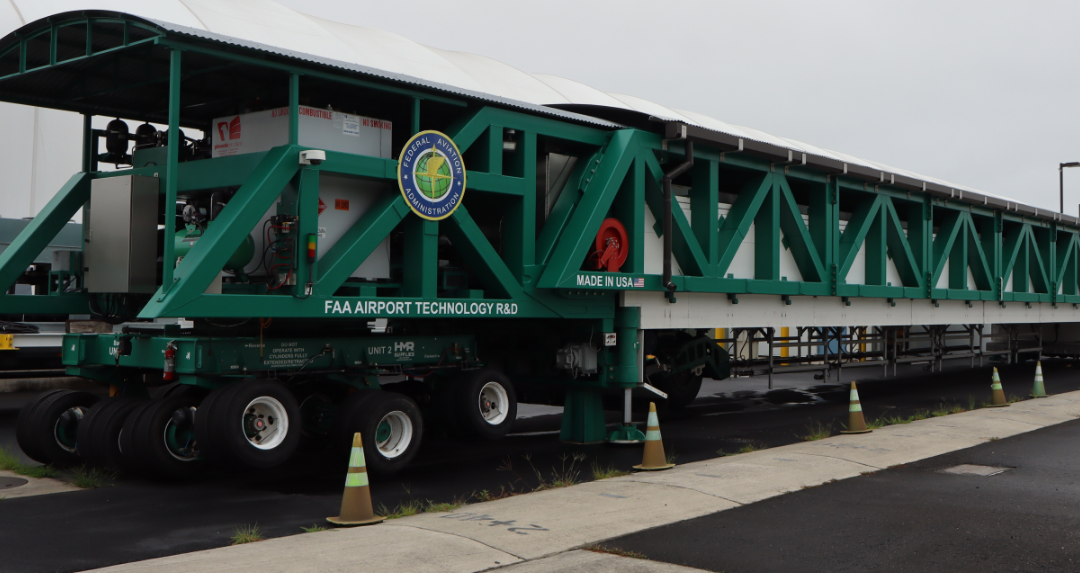
Allan Myers played host to NAPA staff at two facilities in the Mid-Atlantic in the fall, including at a project at the Federal Aviation Administration (FAA) William J. Hughes Technical Center near Atlantic City, N.J.

Crews began experimenting with cold central plant recycling (CCPR) at the facility, eventually constructing a series of test strips to be evaluated with special equipment that can emulate the pressure conditions of heavy aircraft as a measure of performance. The fire truck-sized apparatus can be customized to simulate the conditions of several airplane models, with an even more specialized tool inside the National Airport Pavement Test facility at the Hughes Center capable of simulating the pavement stress equal to some of the largest aircraft on earth.

Jean-Paul Fort Named CAPRI Vice Chair

NAPA Pavement Engineering & Innovation Director Jean-Paul Fort was elected in the spring to represent the industry as Vice Chair of the Consortium for Asphalt Pavement Research and Implementation (CAPRI).

CAPRI is a pooled fund with industry, academia, and departments of transportation developed to tackle critical challenges for the asphalt community. CAPRI’s dozens of members generate research funding with dues. Members, in turn, receive a voice when it’s time to select projects to fund.

NAPA once again led the National Work Zone Safety Coalition alongside the American Traffic Safety Services Association (ATSSA), a group of 16 member organizations including national trades representing engineers, equipment manufacturers and distributors, unions, road contractors, construction materials groups, and utility contractors. The collective has become a resource that Capitol Hill staff and Members of Congress can work with to drive results.

Additionally, the Coalition has addressed the T&I Committee and USDOT to share policy priorities including increasing policy presence in work zones, deploying federal work zone safety contingency funds, requiring work zone training in drivers education courses nationwide, and incentivizing lane and road closures during construction.

Preventing Roadside and Work Zone Deaths Act

In April, with the help of NAPA, Representative Troy Carter (R-La) introduced the Preventing Roadside and Work Zone Deaths Act. This bill would increase the deployment of work zone safety contingency funds, stand up a working group with FHWA and other stakeholders to improve work zone safety, and increase data collection for work zone crashes. Our Coalition also worked with Senate partners to introduce a companion bill, increasing the likelihood that these provisions will be rolled into the next highway reauthorization package.

NAPA’s Heat Illness Prevention Resources Provide Guidance Among Uncertainty

In January 2025, NAPA submitted Agency comments illustrating our industry’s progress on meeting OSHA’s ongoing National Emphasis Program while emphasizing that a one-size-fits-all rule – like the previous administration’s rulemaking to establish a Heat Standard – would not be effective or tenable due to logistical constraints associated with asphalt road construction work.

As an alternative, NAPA called to OSHA’s attention our industry’s ongoing efforts to protect road construction workers from outdoor heat. Given that OSHA’s priorities have changed substantially since January, and ongoing litigation, the proposed Heat Standard rule remains highly uncertain.

Members Imagine new Workforce Approaches at NAPA Midyear

Dunn Construction’s Chris Stricklin tackled the industry’s workforce constraints as only a former fighter pilot could, drawing connections between his career with the U.S. Air Force and the factors that lead to employee retention in any industry.

Stricklin explained how Dunn Construction spun off Dunn University through a partnership with Jefferson State Community College. Through the new educational component, new hires spent the first two weeks training, allowing them to grow into their position during their first days with the company instead of a daunting traditional onboarding that can drive these recruits away.

“Think about the power of a ticket to the middle class for people,” he said. “We need careers with career progression pathways.”

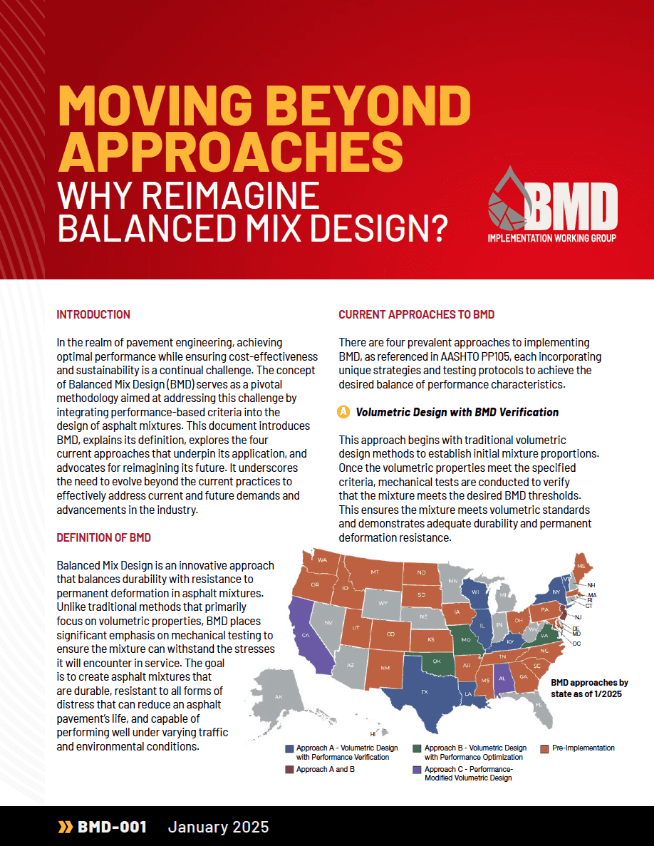
In the realm of pavement engineering, achieving optimal performance while ensuring cost-effectiveness and sustainability is a continual challenge. In April, the Balanced Mix Design (BMD) Implementation Working Group (IWG) presented a new standard of practice to AASHTO designed to replace AASHTO PP105.

Why Reimagine BMD?

The current standard of practice provided four approaches to showcase how to design a mix for BMD. The new standard of practice focuses on how to specify BMD mixtures allowing for more flexibility in how mixes are designed. Moving from four approaches to three tiers, as an agency moves up the tiers, it focuses more on mechanical tests and less on constituent and volumetric properties.